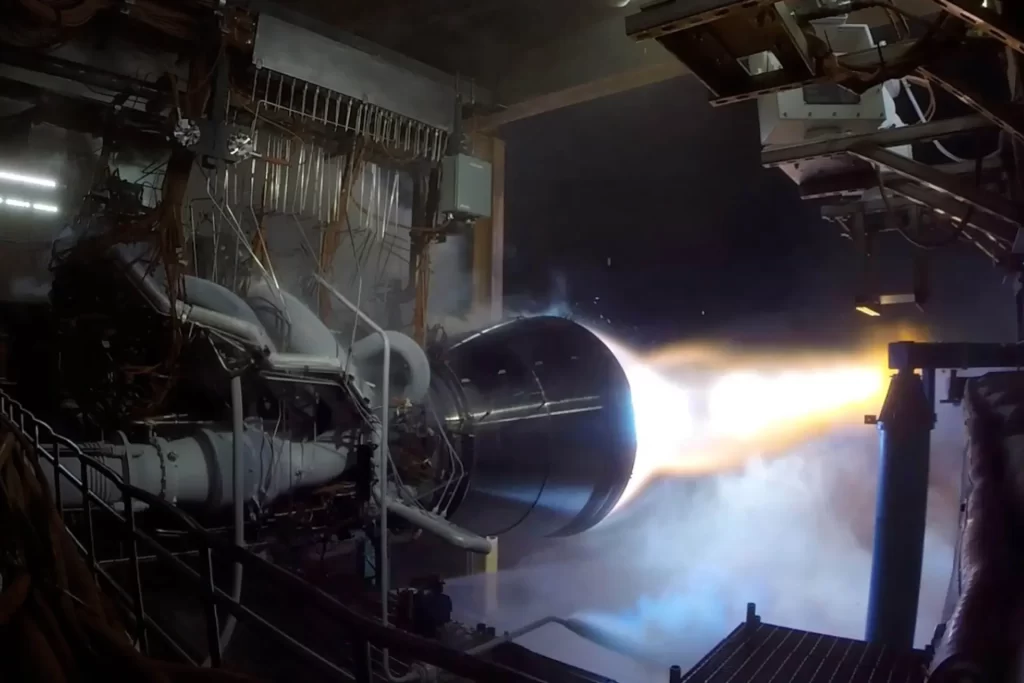
Blue Origin Engines
Rocket Engines
Designed for Reuse
Blue Origin Engines
Our Approach to Engines
Operationally reusable rockets demand high-performance engines capable of deep throttling for soft landings. Built for multiple uses, our family of engines is powering the next generation of rockets for commercial, civil, national security, and human spaceflight.
Blue Origin engines are designed and developed at our headquarters in Kent, WA. We produce the BE-4, BE-3U, and BE-7 engines in Huntsville, AL. Our engines and propulsion subsystems are thoroughly tested and qualified near Van Horn, TX and at Test Stand 4670 in Huntsville, AL.
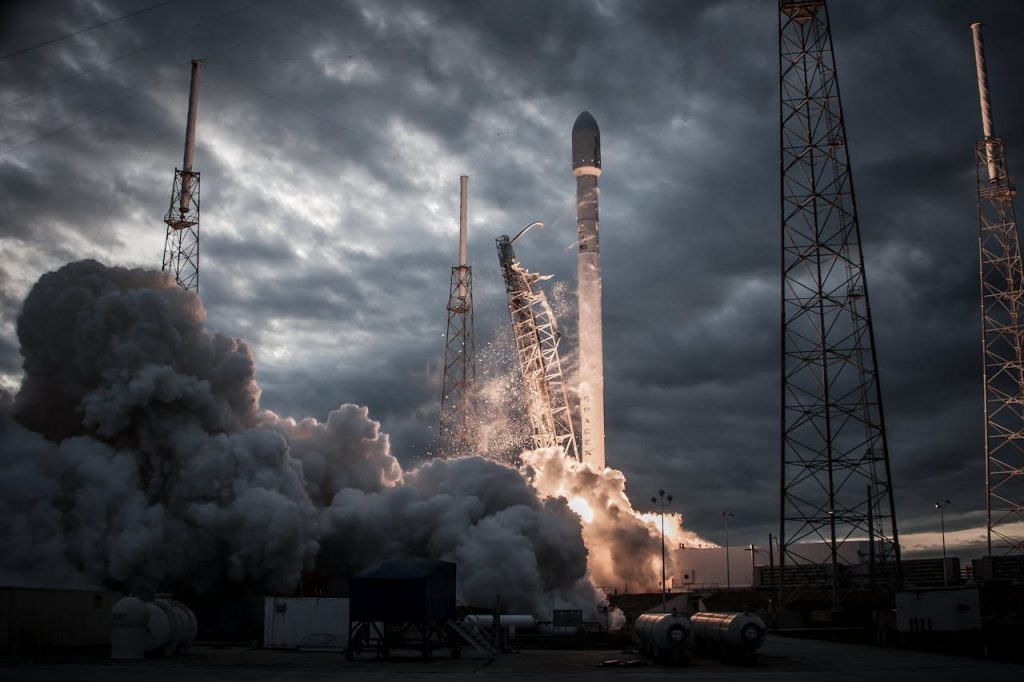
BE-3PM
The BE-3PM was the first new liquid hydrogen-fueled rocket engine to be developed for production in America in over a decade.
BE-3PM: A Historic Rocket Engine
On November 23, 2015, BE-3PM powered New Shepard’s Propulsion Module (PM) above the Kármán line and reignited for a soft landing on its history-making flight to space and back. That same engine repeated the feat four more times before we retired that propulsion module.
Designed for First-Stage Applications
At full power, BE-3PM generates 110,000 lbf (490 kN) thrust at sea level. When returning to Earth, it uniquely throttles down to 20,000 lbf (90 kN), enabling a gentle vertical landing on the pad.
Like the Space Shuttle’s main engines, BE-3PM uses high-performing liquid oxygen and liquid hydrogen. BE-3PM is designed for operational reusability with minimal maintenance between flights. Our approach increases availability while lowering operating costs.
BE-3U
Optimized to operate in the vacuum of space, the BE-3U powers the New Glenn upper stage.

Powering New Glenn's Upper Stage
BE-3U is a liquid oxygen/liquid hydrogen engine capable of generating 160,000 lbf (712 kN) thrust in vacuum, with throttleability to 120,000 lbf (530 kN). Two restartable BE-3U engines power New Glenn’s upper stage, enabling a wide range of customer missions including direct injection to geostationary orbit.
Designed for Performance and Reliability
BE-3U leverages heritage BE-3 hardware while improving efficiency and thrust-to-weight to support the upper-stage mission. Building on years of operational experience and rigorous development testing, the engine provides a balance of performance and cost in a robust, reliable package.
Like the Space Shuttle’s main engines, BE-3PM uses high-performing liquid oxygen and liquid hydrogen. BE-3PM is designed for operational reusability with minimal maintenance between flights. Our approach increases availability while lowering operating costs.
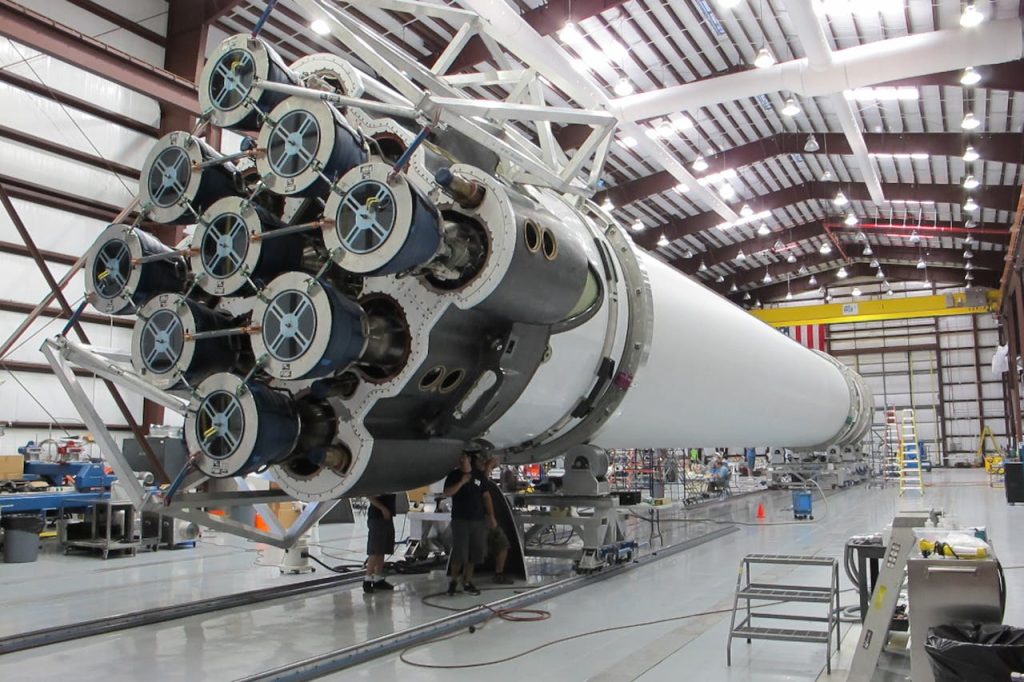
BE-4
The first oxygen-rich staged combustion engine designed and manufactured in the U.S. powers the next generation of American orbital rockets, including New Glenn.
BE-4 Engine
BE-4 is the most powerful liquefied natural gas (LNG)-fueled oxygen-rich staged combustion engine ever flown. BE-4 is capable of producing 550,000 lbf (2,450 kN) thrust with deep throttle capability.
Robust Design
We chose LNG because it is highly efficient, low cost and widely available. Unlike kerosene, LNG can be used to self-pressurize its tank. Known as autogenous repressurization, this eliminates the need for costly and complex systems that draw on Earth’s scarce helium reserves. LNG also possesses clean combustion characteristics even at low throttle, simplifying engine reuse compared to kerosene fuels.
BE-4 was designed from the beginning to be a medium-performing version of a high-performance architecture. It’s a conscious design choice made to lower development risk while meeting performance, schedule and reusability requirements. With our hardware-rich approach, multiple developmental units and redundant test stands enable a high test tempo and rapid learning.